
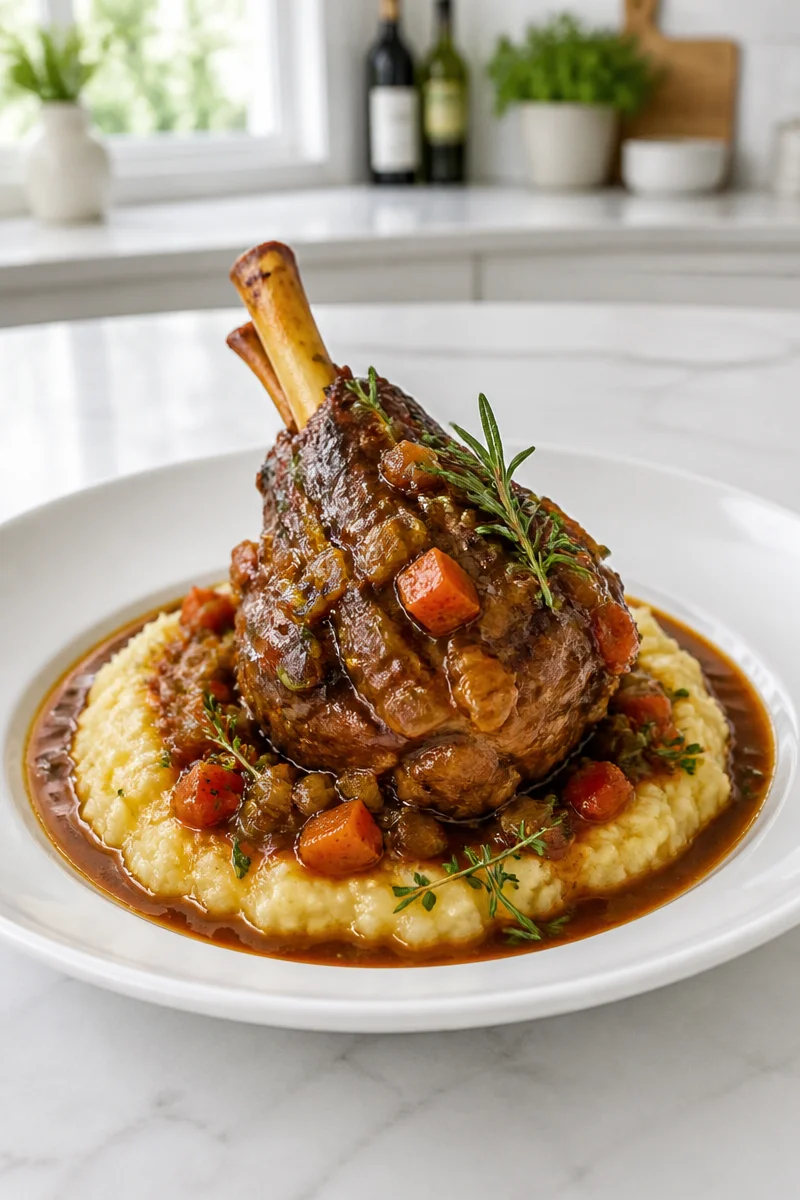
Christmas dinner should feel special, and this classic braised lamb shank recipe does exactly that. It is warm, rich, and deeply comforting, so every bite feels like a celebration at the table. I love it for holiday gatherings because it looks elegant, yet it still has that cozy, home-cooked charm people remember long after the meal is over.
This dish starts with 4 lamb shanks seared in olive oil and seasoned with kosher salt and freshly ground black pepper. Then the shanks braise with onion, carrots, leeks, garlic, tomato paste, dry red wine, and hot beef broth. A simple herb sachet with bay leaf, dried thyme, and dried rosemary adds steady flavor, while fresh rosemary and fresh thyme bring brightness at the end. Served over polenta or mashed potatoes, the sauce turns silky, savory, and full of holiday comfort.
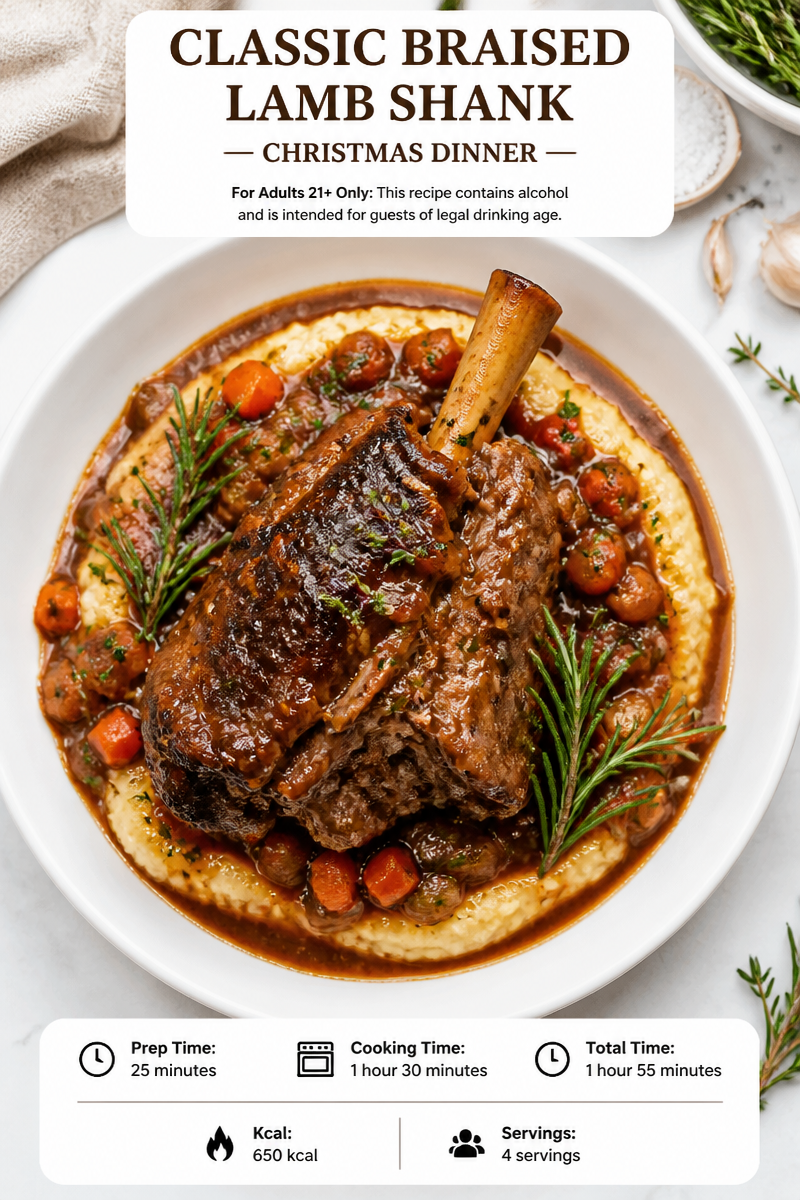
The method is easy to follow, too. First, you sear the lamb for a deep brown crust. Next, you soften the vegetables, deglaze the pan with wine and broth, and then let the oven do the slow work. Because the braise is covered, the meat becomes fork-tender and almost falls from the bone. After that, you finish the sauce, spoon everything over creamy polenta or mashed potatoes, and serve. Prep takes about 25 minutes, cooking takes about 1 hour 30 minutes, and the total time is 1 hour 55 minutes.
This braised lamb shank Christmas dinner is perfect for a holiday meal, a cozy Sunday supper, or any chilly night when you want something hearty and memorable. And because it serves four, it works well for a smaller family dinner or a special evening with close friends.
Why You’ll Love This Classic Braised Lamb Shank Christmas Dinner
- It feels special enough for Christmas, yet the steps are simple enough for a home cook.
- The flavor is rich and layered, thanks to wine, broth, tomato paste, and herbs.
- The lamb turns tender in the oven, so the texture is soft and satisfying.
- It pairs beautifully with polenta or mashed potatoes, which soak up the sauce.
- It makes the house smell wonderful, so it adds to the holiday mood.
Lamb Shank Tips
Lamb shanks are the star of this dish, so choosing good ones matters. Look for shanks that are similar in size, since that helps them cook evenly. If you can, ask for meaty shanks with a little fat and connective tissue, because those parts break down during braising and give you that rich, tender result. Also, pat the lamb very dry before seasoning. That small step helps the meat brown better in the pan, and good browning means better flavor in the finished braise.
Options for Substitutions
- Use beef shanks if you want a different slow-braised meat with a similar hearty feel.
- Swap the dry red wine for extra beef broth if you prefer to cook without alcohol.
- Replace the leeks with more onion if leeks are not available.
- Use vegetable broth instead of beef broth for a lighter flavor.
- Trade the fresh rosemary and fresh thyme finish for parsley if you want a softer herbal note.
- Serve it with creamy mashed cauliflower instead of polenta or mashed potatoes for a lower-carb side.
Watch Out for These Mistakes
First, do not skip the sear. The browned crust on the lamb adds a deep, savory taste to the sauce. If the shanks go into the oven without proper browning, the final dish can taste flatter. So, take a few extra minutes and let them brown well on all sides.
Next, watch the heat while you deglaze. The wine and broth should loosen the browned bits from the skillet, but if the pan is too hot, the liquid may reduce too fast or scorch. Stir and scrape gently so you capture all that flavor in the braising liquid.
Also, do not rush the braise. Lamb shanks need time to become tender, and undercooked shanks can feel tough and chewy. If the meat is not yet pulling away from the bone, give it a little more oven time and check again.
Finally, taste the sauce before serving. Since the broth, tomato paste, and wine all bring flavor, the seasoning may need a final pinch of salt or pepper. If the sauce seems thin, simmer it a few minutes on the stove so it coats the meat better.
What to Serve With Classic Braised Lamb Shank Christmas Dinner?
This braised lamb shank Christmas dinner pairs well with simple, cozy sides that do not fight the sauce. A green vegetable works well, so consider roasted Brussels sprouts, green beans, or tender peas. You could also add a crisp salad for balance, or serve warm bread if you want something easy for soaking up the pan juices. And of course, polenta or mashed potatoes are classic choices because they make the rich sauce feel even more comforting.
Storage Instructions
Store: Keep leftovers in their sauce in an airtight container in the fridge for up to 3 days. The sauce helps keep the lamb moist.
Freeze: Freeze cooled lamb shanks and sauce in freezer-safe containers for up to 3 months. For best results, freeze without the potato or polenta side.
Reheat: Reheat covered on the stovetop over low heat until hot, adding a splash of broth if needed. You can also reheat in the microwave in short bursts, stirring the sauce between each burst so it heats evenly.
Recipe Info
Preparation Time: 25 minutes
Cooking Time: 1 hour 30 minutes
Total Time: 1 hour 55 minutes
Level of Difficulty: Medium
Servings: 4 servings
Calories: 650 kcal per serving
Estimated Nutrition
Estimated nutrition for the whole recipe (without optional ingredients):
- Calories: 2,300 to 2,700
- Protein: 140 to 170 g
- Fat: 150 to 190 g
- Carbohydrates: 35 to 55 g
Ingredients
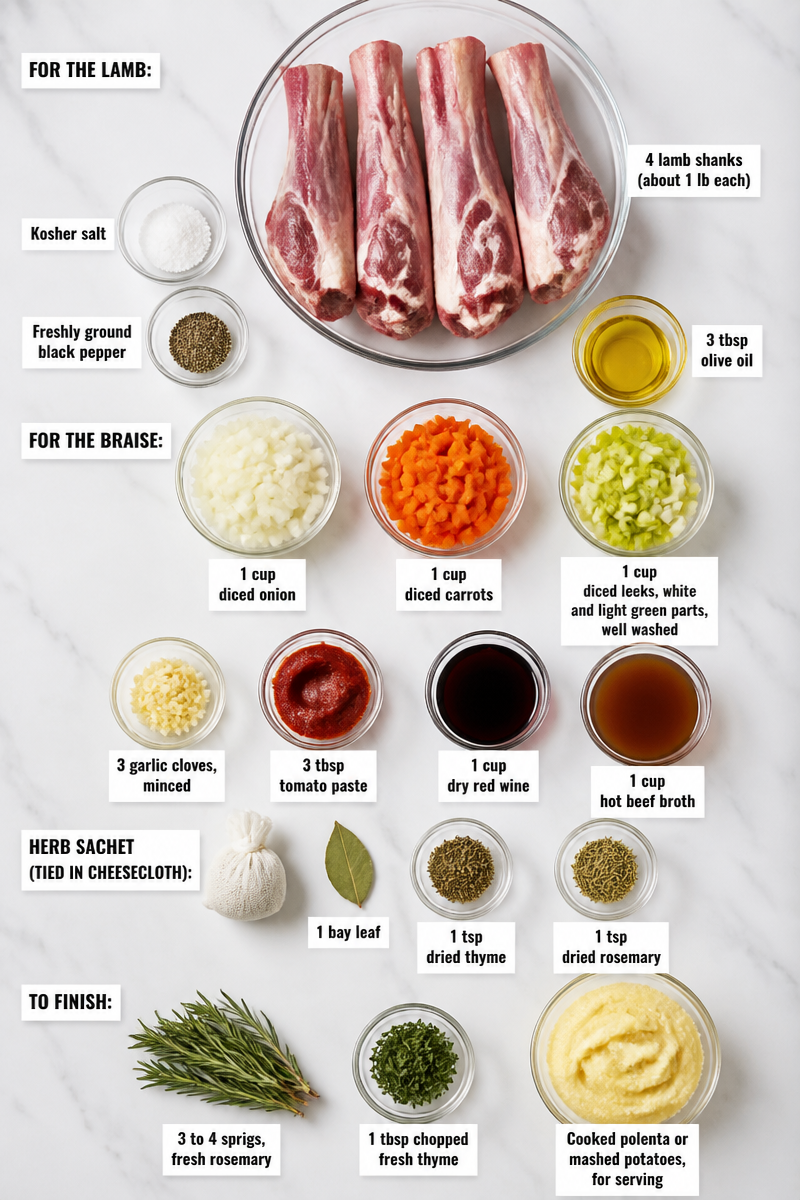
- 4 lamb shanks (about 1 lb each)
- Kosher salt and freshly ground black pepper
- 3 tbsp olive oil
- 1 cup diced onion
- 1 cup diced carrots
- 1 cup diced leeks, white and light green parts, well washed
- 3 garlic cloves, minced
- 3 tbsp tomato paste
- 1 cup dry red wine
- 1 cup hot beef broth
- 1 bay leaf
- 1 tsp dried thyme
- 1 tsp dried rosemary
- 3 to 4 sprigs fresh rosemary
- 1 tbsp chopped fresh thyme
- Cooked polenta or mashed potatoes, for serving
Step-by-Step Instructions
Step 1: Preheat the Oven
Start by heating the oven to 350°F. This gives you the right temperature for a slow, gentle braise, which is what makes the lamb shanks so tender. While the oven heats, gather a large heavy skillet and an ovenproof casserole or Dutch oven with a lid.
Step 2: Season and Sear the Lamb
Pat the lamb shanks dry with paper towels, then season them well with salt and pepper. Next, heat the olive oil in a large skillet over high heat. Sear the shanks, turning them so all sides brown well, for about 6 minutes total. After that, move them to the casserole or Dutch oven.
Step 3: Cook the Vegetables
In the same skillet, add the onion, carrots, and leeks. Cook them for 3 to 4 minutes, until they start to soften and wilt. Then add the garlic, the herb sachet, and the tomato paste. Stir for about 1 minute so the paste darkens a little and the herbs begin to release their flavor.
Step 4: Deglaze the Pan
Pour in the red wine and hot beef broth. Bring the mixture to a boil, and scrape up the browned bits from the bottom of the pan. Those little browned pieces hold a lot of flavor, so do not leave them behind. This step builds the rich braising liquid that gives the lamb its deep taste.
Step 5: Braise in the Oven
Pour the vegetable and wine mixture over the lamb shanks. Cover the pot tightly, then braise in the oven for 1 hour 20 minutes. When the lamb is done, it should be fork tender and just starting to separate from the bone. If needed, give it a little more time until it reaches that soft, rich texture.
Step 6: Finish the Sauce and Serve
Remove the herb sachet and taste the sauce. Adjust the seasoning if needed, then simmer it on the stove for about 5 minutes if the sauce needs to reduce. Finally, place each shank on a mound of polenta or mashed potatoes. Spoon the pan juices and vegetables over the top, and garnish with fresh rosemary sprigs and chopped thyme.
Conclusion
This classic braised lamb shank Christmas dinner brings together simple ingredients, slow cooking, and big holiday flavor. The lamb turns tender, the sauce becomes rich and savory, and the polenta or mashed potatoes make every bite feel complete. It is a lovely choice when you want a dinner that feels festive without being fussy.
If you make this recipe, I hope it brings warmth to your table and plenty of happy conversation. Try it for your next holiday meal, then come back and share how it turned out. You can also explore more cozy dinner recipes if you want another comforting dish for the season.
