
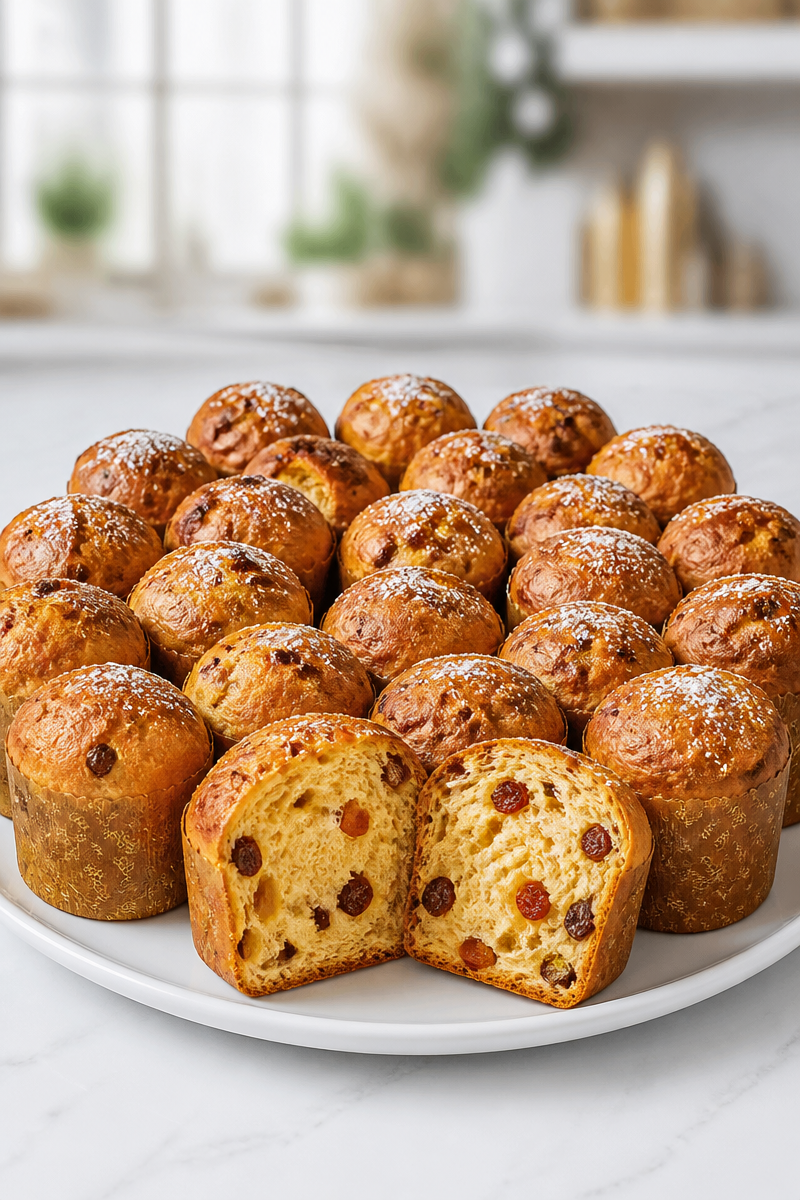
The first bite of this Classic Homemade Panettone Christmas Bread feels like pure holiday comfort. It is soft, rich, lightly sweet, and full of cheerful fruit. Because each mini loaf bakes up golden and tender, this is the kind of bread that makes a table feel warm and welcoming right away.
What gives this panettone its special taste is the mix of simple, good ingredients. The sponge starts with 8 oz water, 15 g instant yeast, and 10 oz bread flour, which helps build flavor overnight. Then the dough comes together with unsalted butter, honey, fine salt, eggs, egg yolks, vanilla, and more bread flour for a soft, rich crumb. After that, the fruit adds color and sweetness, including raisins, candied orange peel, dried cranberries, dried currants, and lemon zest. Finally, an egg wash gives the tops a lovely shine, while small panettone paper molds help each loaf keep its shape.
The method is easier than it looks, especially if you break it into steps. First, you make a sponge the evening before and let it chill overnight. Then, the next day, you mix the butter, honey, eggs, sponge, flour, and salt, knead the dough until smooth, and work in the fruit. After a short rest, you shape the dough into small rounds, let them proof, and bake until deeply golden.
This Classic Homemade Panettone Christmas Bread is perfect for holiday mornings, cookie trays, winter brunches, and gift baskets. Also, because the recipe makes 18 mini loaves, it is great for sharing with neighbors, teachers, and family members who enjoy homemade treats. ## Why You’ll Love This Classic Homemade Panettone Christmas Bread
- It has that classic holiday flavor with sweet fruit, citrus, honey, and vanilla.
- The mini size makes the bread easy to serve, gift, and store.
- The overnight sponge builds a richer taste without extra effort the next day.
- The bread is soft, buttery, and festive, so it works well for breakfast or dessert.
- It freezes well, so you can make it ahead for busy holiday weeks.
Bread Flour Tips
Bread flour is the main flour in this recipe, and it matters a lot. Because bread flour has more protein than all-purpose flour, it helps the dough become strong, stretchy, and airy. That is important for panettone, since this bread needs enough structure to rise well and hold all that butter and fruit.
For the best result, use fresh bread flour from a bag that has been stored in a cool, dry place. Also, measure it carefully. Too much flour can make the bread dry, while too little can make the dough too loose. If your kitchen is warm, the dough may feel softer, so resist the urge to add extra flour too soon. Instead, knead until it becomes smooth, elastic, and passes the windowpane test.
Options for Substitutions
- Use all-purpose flour in place of bread flour if needed, but expect a softer, less chewy crumb.
- Swap maple syrup for honey if you want a different sweet note.
- Replace the raisins, cranberries, and currants with chopped dried apricots, cherries, or dates.
- Use orange zest instead of candied orange peel if you prefer a fresher citrus flavor.
- Replace vanilla extract with almond extract for a stronger bakery-style aroma, using a little less.
- If you do not have panettone paper molds, use muffin cups or small paper baking cups set inside a muffin pan.
Watch Out for These Mistakes
One common mistake is rushing the sponge. Since the sponge chills overnight, it needs time to double in size and develop flavor. If you skip that step or shorten it too much, the bread may taste less rich and may not rise as well. So, give the sponge the full 12 to 15 hours whenever possible.
Another issue is adding too much flour during kneading. This dough should feel soft and stretchy, not stiff. Because panettone dough is enriched with butter, honey, eggs, and yolks, it may seem sticky at first. However, once you knead it long enough, it should smooth out. If you add too much flour, the crumb can turn dense and heavy.
Also, do not skip the proofing step. The dough should puff up and come close to the top of the molds before baking. If you bake too early, the loaves may be tight and short. On the other hand, if you overproof them, they may collapse in the oven. Watch the dough, not just the clock.
Finally, keep an eye on the oven. Mini panettone can brown quickly because of the honey and egg wash. So, if the tops color too fast, tent them with foil. That small step helps the centers bake through without burning the tops.
What to Serve With Classic Homemade Panettone Christmas Bread?
This Classic Homemade Panettone Christmas Bread pairs beautifully with a mug of coffee, hot tea, or warm cocoa. In addition, you can serve it with whipped butter, orange marmalade, cream cheese, or a light mascarpone spread. For a fuller holiday spread, add scrambled eggs, fresh fruit, or a bowl of yogurt. Because the bread is sweet but not heavy, it fits nicely into breakfast, brunch, or dessert.
Storage Instructions
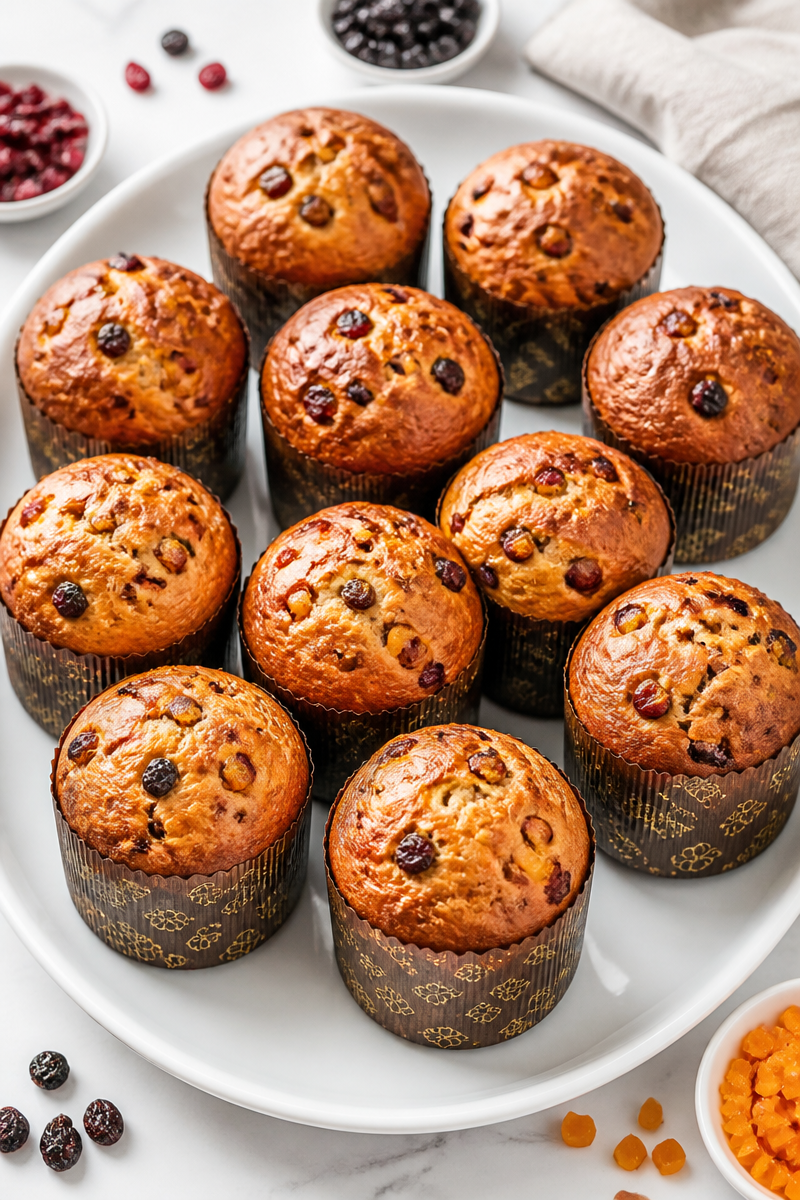
Store: Keep the mini panettone wrapped tightly at room temperature for up to 4 days. If your kitchen is very warm, store it in a cool pantry spot away from sunlight.
Freeze: Wrap each loaf well and freeze for up to 2 months. For best results, wrap first in plastic wrap, then place in a freezer bag.
Reheat: For the stovetop, warm slices in a skillet over low heat for a minute or two per side. For the microwave, heat a slice for 10 to 15 seconds at a time, just until soft and warm. Also, toasting the bread and adding butter makes it even better.
Recipe Info
- Preparation Time: 1 hour, plus 12 hours chilling the sponge, 30 minutes resting, and 1 hour proofing
- Cooking Time: 25 minutes
- Total Time: 14 hours 55 minutes
- Level of Difficulty: Medium
- Servings: 18 mini panettone loaves
Estimated Nutrition
Estimated nutrition for the whole recipe (without optional ingredients):
- Calories: 4,800 to 5,300
- Protein: 90 to 120 g
- Fat: 200 to 260 g
- Carbohydrates: 600 to 700 g
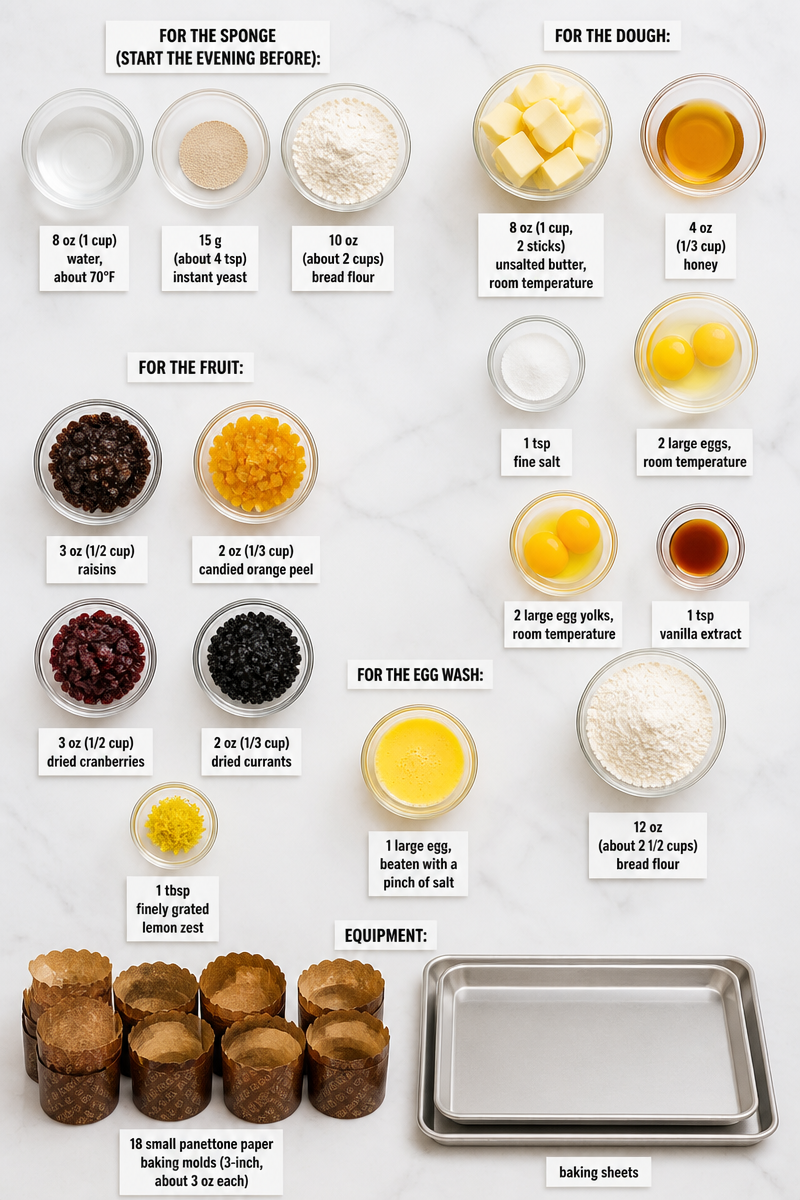
Ingredients
-
FOR THE SPONGE (START THE EVENING BEFORE):
- 8 oz (1 cup) water, about 70°F
- 15 g (about 4 tsp) instant yeast
- 10 oz (about 2 cups) bread flour
-
FOR THE DOUGH:
- 8 oz (1 cup, 2 sticks) unsalted butter, room temperature
- 4 oz (1/3 cup) honey
- 1 tsp fine salt
- 2 large eggs, room temperature
- 2 large egg yolks, room temperature
- 1 tsp vanilla extract
- 12 oz (about 2 1/2 cups) bread flour
-
FOR THE FRUIT:
- 3 oz (1/2 cup) raisins
- 2 oz (1/3 cup) candied orange peel
- 3 oz (1/2 cup) dried cranberries
- 2 oz (1/3 cup) dried currants
- 1 tbsp finely grated lemon zest
-
FOR THE EGG WASH:
- 1 large egg, beaten with a pinch of salt
-
EQUIPMENT:
- 18 small panettone paper baking molds (3-inch, about 3 oz each), baking sheets
Step-by-Step Instructions
Step 1: Make the Sponge the Night Before
Stir the instant yeast into the bread flour in a bowl, then add the water at about 70°F. Mix until you have a shaggy dough. It does not need to look smooth at this stage. After that, cover it tightly and place it in the refrigerator for 12 to 15 hours.
Step 2: Bring the Sponge to Room Temperature
The next morning, take the sponge out of the fridge about 30 minutes before mixing the dough. This helps it warm up a little, so it blends more easily with the butter, eggs, and flour.
Step 3: Mix the Dough
In a stand mixer with the paddle attachment, beat the butter and honey until smooth. Then add the eggs one at a time, followed by the egg yolks and vanilla on low speed. Next, add the sponge and mix on low for about 2 minutes. After that, combine the bread flour and salt, and mix those in on low speed for about 3 minutes.
Step 4: Knead and Add the Fruit
Switch to the dough hook and knead on medium-low speed for about 8 minutes. The dough should become smooth and stretchy, and it should pass the windowpane test. Then add the raisins, candied orange peel, dried cranberries, currants, and lemon zest. Mix just until the fruit is evenly spread through the dough.
Step 5: Rest, Shape, Proof, and Bake
Cover the dough and let it rest at room temperature for 30 minutes. Then divide it into about 18 pieces, each around 3 ounces, and shape each piece into a smooth ball. Place the dough balls into the paper molds on baking sheets, then cover them loosely. Brush the tops with egg wash and let them proof until puffed and nearly at the top of the molds, usually about 60 minutes. While they proof, preheat the oven to 375°F. Bake for about 25 minutes, or until deeply golden and the center reaches 190 to 200°F. If the tops brown too fast, tent them with foil.
Step 6: Cool and Store
Set the mini panettone on a wire rack and let them cool fully. Then serve them plain or dusted with confectioners’ sugar. If you have extras, wrap them well and store them for later. They taste great toasted with butter.
Conclusion
This Classic Homemade Panettone Christmas Bread brings together a soft, rich dough, bright fruit, and a lovely holiday feel in every mini loaf. Since the sponge starts the night before, the bread develops great flavor with very little stress the next day. Also, the small size makes it easy to serve, share, and freeze for later.
If you are looking for a festive bake that feels special but still fits into a home kitchen, this is a wonderful choice. Try it for Christmas morning, holiday gifts, or your next family brunch. Then come back and share how it turned out, or explore more cozy homemade bread recipes for the season.
