
Bibimbap is pure comfort in a bowl. It is warm, colorful, and full of texture, so it feels both cozy and fresh at the same time. I love how this dish brings together simple foods in a way that feels special enough for guests, yet easy enough for a busy weeknight.
This Colorful Korean Bibimbap Rice Bowl uses short grain white rice, eggs, beef tenderloin or thick steak, and a mix of bright vegetables like carrots, zucchini, spinach, shiitake mushrooms, and bean sprouts. Then everything gets tied together with a bold bibimbap sauce made with gochujang, mirin, rice vinegar, soy sauce, sugar, garlic, and sesame oil. The flavor is a lovely balance of sweet, savory, spicy, nutty, and just a little tangy.
The method is simple, too. First, you make the sauce. Next, you marinate the beef, soak the shiitake, and cook each vegetable separately so every color stays bright and each bite keeps its own taste. After that, you fry the eggs, arrange everything over warm rice, and finish with sesame seeds and sesame oil. This recipe includes alcohol in the sauce, so it is intended for guests of legal drinking age.
This is the kind of meal that works well when you want something hearty, but not heavy. It is also a great choice for family dinners, relaxed weekends, meal prep, and even potlucks where you want the food to look as good as it tastes.
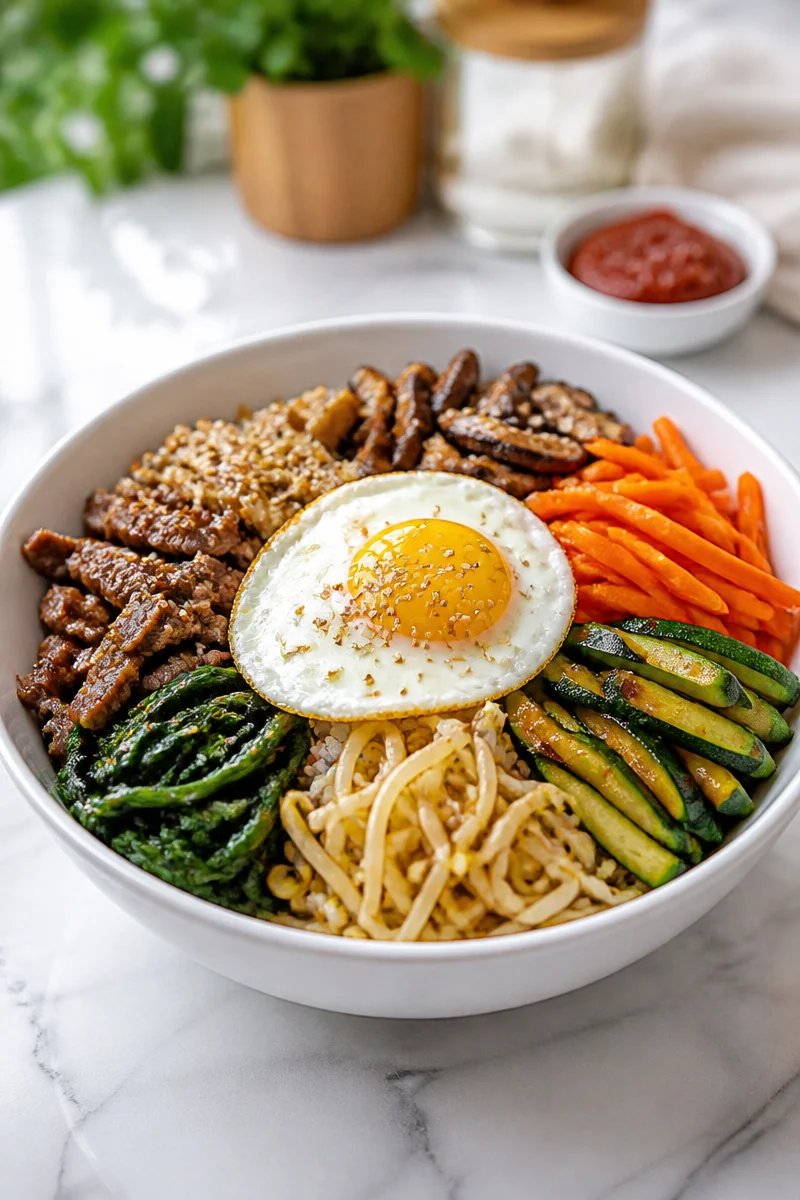
Why You’ll Love This Colorful Korean Bibimbap Rice Bowl
- It is full of color and texture. You get soft rice, crisp-tender vegetables, juicy beef, and a rich egg on top.
- It tastes like restaurant food. However, it is still very doable at home with basic tools and simple steps.
- It is flexible. You can swap some ingredients and still end up with a satisfying bibimbap bowl.
- It makes a complete meal. You get protein, vegetables, grains, and plenty of flavor in one bowl.
- It is great for busy cooks. Once the ingredients are prepped, assembly is quick and easy.
Beef Tips
The beef is the heart of this bibimbap bowl, so choosing the right cut matters. For the best result, use beef tenderloin or another very tender thick steak, then slice it as thinly as you can. Thin slices cook fast, stay soft, and soak up the marinade well. If your beef is hard to slice, chill it for 20 to 30 minutes first, because that helps it firm up and cut more neatly. Also, if you can, cut against the grain. That small step makes each bite easier to chew.
The marinade is simple but smart. The grated green apple helps tenderize the meat and adds a light sweetness. Meanwhile, the garlic, ginger, soy sauce, honey, and toasted sesame oil build deep flavor fast. Thirty minutes is enough, but overnight in the fridge gives you an even better result. Just remember to let the excess marinade drip off before cooking, so the beef browns instead of steaming.
Options for Substitutions
- Rice: Use brown rice, jasmine rice, or even cauliflower rice if you want a lighter bowl. Short grain rice is still the most traditional choice.
- Beef: Swap the beef for thinly sliced chicken, pork, or tofu if you want another protein.
- Eggs: Try a soft-boiled egg or a fried egg with set yolk if you do not want a runny center.
- Vegetables: Use bell peppers, mushrooms, shredded cabbage, or baby bok choy if you need to work with what is in the fridge.
- Sauce: If you do not have mirin, use a little extra rice vinegar plus a touch more sugar.
- Seasoning: If fish sauce is not on hand, just use soy sauce in its place.
Watch Out for These Mistakes
One common mistake is overcooking the vegetables. Bibimbap tastes best when the vegetables still have some life in them. So, cook the carrots until just tender, keep the zucchini soft but not mushy, and wilt the spinach only briefly. In addition, let the vegetables cool before assembling, because that keeps the rice from turning gummy.
Another easy mistake is cooking the beef too long. Because it is sliced thin, it only needs a few minutes in a very hot skillet. If you cook it too long, it can turn dry. Also, do not crowd the pan. If the beef steams instead of sears, you will lose the nice caramelized bits that add so much flavor.
The sauce can also go wrong if the sugar does not fully dissolve. Stir it well, and give it a minute if needed. That way, the sauce turns smooth instead of grainy. After that, taste it and adjust only if you need to. Bibimbap sauce should be bold, but it should not overpower the bowl.
Finally, build the bowl at the right time. If you assemble too early, the rice can lose its warmth and the vegetables can soften too much. For the best texture, keep everything ready, then put the bowls together just before serving. That small bit of timing makes a big difference.
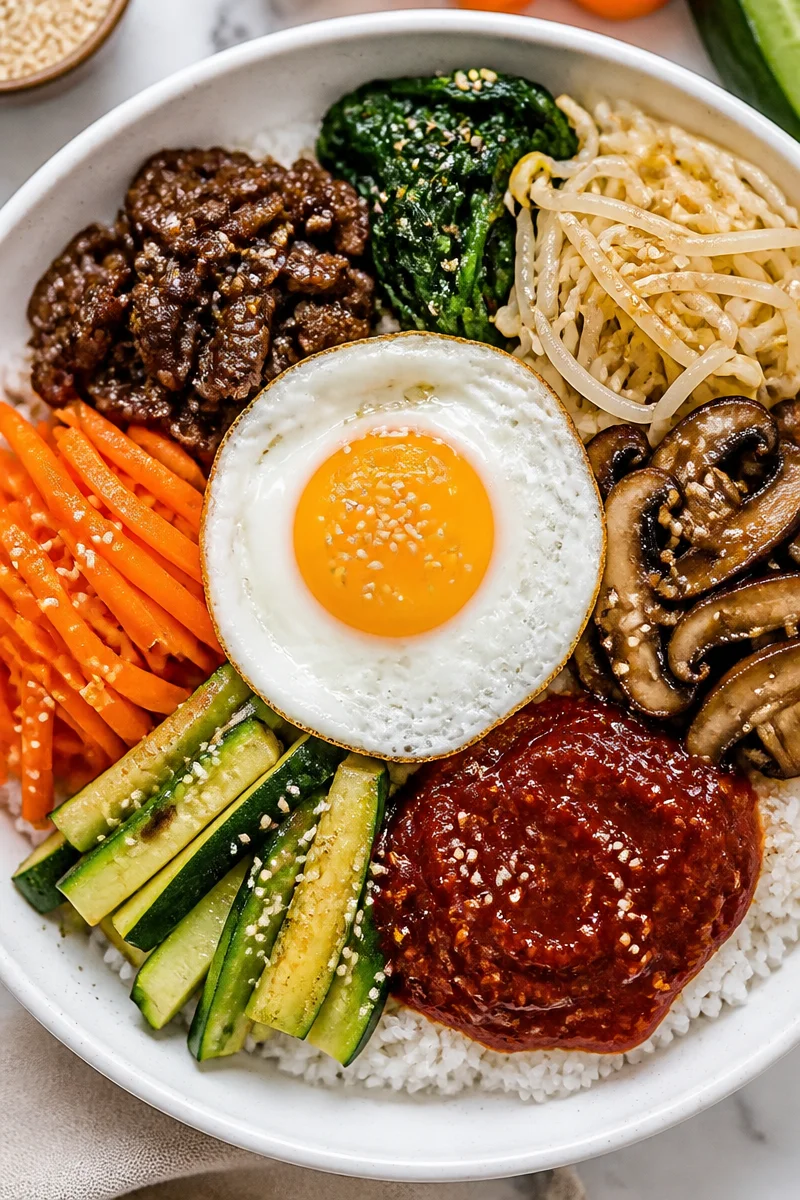
What to Serve With Colorful Korean Bibimbap Rice Bowl?
This bibimbap bowl is filling on its own, but it also pairs nicely with a few simple side dishes. A small bowl of kimchi adds tang and crunch, while a cucumber salad brings cool freshness. You could also serve miso soup or a light Korean-style broth if you want something warm on the side. If you are hosting, a plate of pickled vegetables or steamed dumplings makes the meal feel even more complete.
Storage Instructions
Store: Keep leftover bibimbap components in separate airtight containers in the refrigerator for 4 to 5 days. If you can, store the sauce on its own as well, so the rice and vegetables stay in better shape.
Freeze: The marinated raw beef can be frozen right after you mix it with the marinade. Freeze it for up to 2 months for best quality. However, I do not recommend freezing the cooked vegetables or assembled bowls, because their texture will soften too much.
Reheat: For the stovetop, warm the rice, beef, and vegetables in a skillet over medium heat with a small splash of water or oil. For the microwave, cover the bowl loosely and heat in short bursts, stirring if needed, until hot. Then add a fresh egg if you want the best texture.
Recipe Info
Preparation Time: 40 minutes
Cooking Time: 30 minutes
Total Time: 1 hour 10 minutes
Level of Difficulty: Easy to medium
Servings: 4
Calories: 689 kcal per serving
Estimated Nutrition
Estimated nutrition for the whole recipe (without optional ingredients):
- Calories: about 2,750 to 2,850 total
- Protein: about 110 to 130 g total
- Fat: about 90 to 105 g total
- Carbohydrates: about 280 to 310 g total
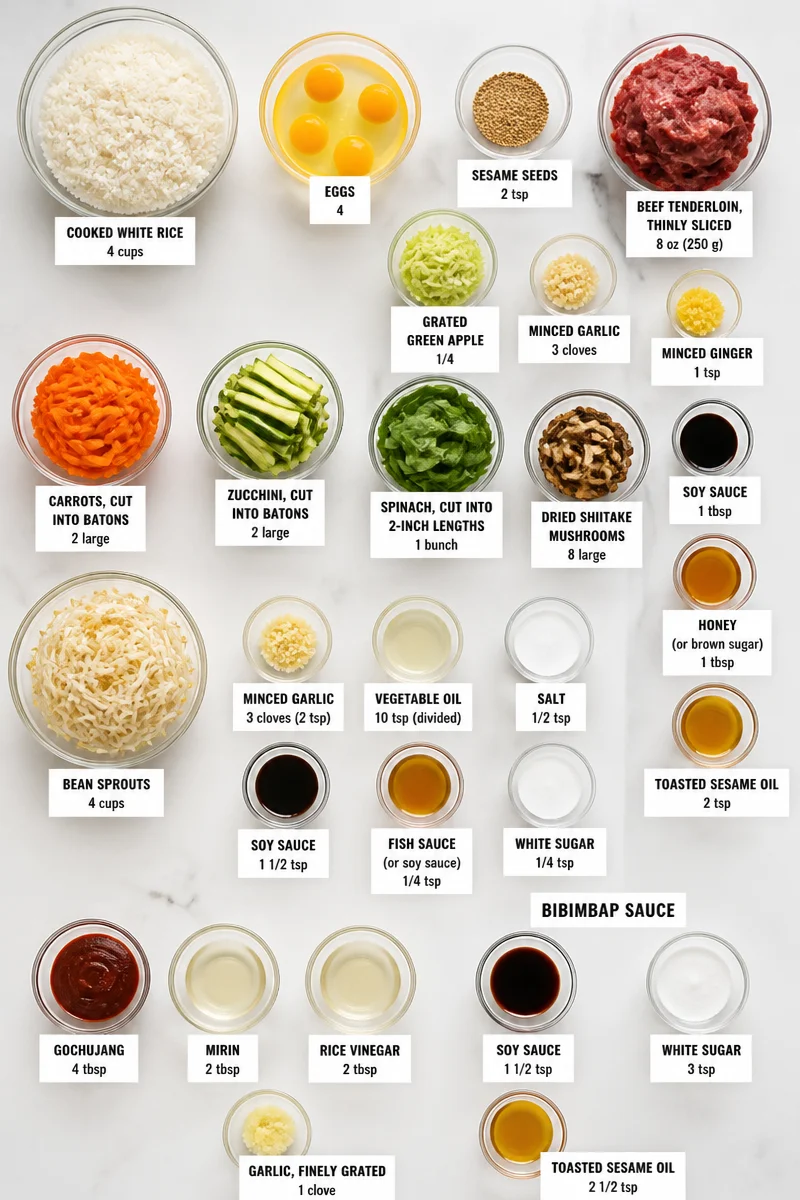
Ingredients
-
FOR THE BOWLS:
- 4 cups cooked white rice (short grain preferred; sushi rice works)
- 4 eggs
- 2 tsp sesame seeds
-
FOR THE BEEF AND MARINADE:
- 8 oz (250 g) beef tenderloin or thick steak, very finely sliced
- 1/4 green apple, grated
- 3 garlic cloves, minced
- 1 tsp minced ginger
- 1 tbsp soy sauce (light or all-purpose)
- 1 tbsp honey (or brown sugar)
- 2 tsp toasted sesame oil
-
FOR THE VEGETABLES:
- 2 large carrots, cut into batons (about 2 x 1/4 inch)
- 2 large zucchini, cut into batons (about 2 x 1/4 inch)
- 1 bunch spinach, cut into 2-inch lengths
- 8 large dried shiitake mushrooms
- 4 cups bean sprouts
- 2 tsp minced garlic (about 3 cloves)
- 10 tsp vegetable oil, divided (about 2 tsp for each component)
- 1/2 tsp salt
- 1 1/2 tsp soy sauce
- 1/4 tsp fish sauce (or soy sauce)
- 1/4 tsp white sugar
- Toasted sesame oil, for finishing
-
FOR THE BIBIMBAP SAUCE:
- 4 tbsp gochujang
- 2 tbsp mirin
- 2 tbsp rice vinegar
- 1 1/2 tsp soy sauce
- 3 tsp white sugar
- 1 garlic clove, finely grated
- 2 1/2 tsp toasted sesame oil
Step-by-Step Instructions
Step 1: Make the Bibimbap Sauce
Stir all the sauce ingredients together in a small bowl until the sugar dissolves. Then set the sauce aside so the flavors can blend while you work on the rest of the meal. If you like a smoother sauce, whisk it well for a few extra seconds.
Step 2: Marinate the Beef
Add the sliced beef to a bowl with the grated apple, minced garlic, ginger, soy sauce, honey, and toasted sesame oil. Toss well so every piece is coated. Then let it marinate for 30 minutes, or cover and refrigerate it overnight if you want a deeper flavor.
Step 3: Soak the Shiitake and Prep the Vegetables
Cover the dried shiitake mushrooms with boiling water and let them soak for 30 minutes. After that, drain them, squeeze out the extra water, and slice them thinly. If you want, you can also salt the carrot and zucchini separately, let them rest for 20 minutes, and then drain them. That helps keep them crisp and well-seasoned.
Step 4: Cook the Beef and Individual Vegetables
Heat a little oil in a large skillet over high heat. Let the excess marinade drip off the beef, then cook it for 3 to 4 minutes until it is cooked through and lightly caramelized. Keep it warm. After that, cook each vegetable separately. Start with the shiitake, then the carrots, then the zucchini, then the spinach, and finally the bean sprouts. This keeps each ingredient bright, crisp-tender, and full of flavor.
Step 5: Cool, Fry the Eggs, and Assemble
Let all the vegetables come to room temperature or just slightly warm. Meanwhile, fry the eggs to your liking, with runny yolks recommended for the best bibimbap experience. Then divide the warm rice among four bowls. Arrange the beef and vegetables on top in neat sections, add an egg to each bowl, sprinkle with sesame seeds, and finish with a little sesame oil.
Step 6: Serve and Enjoy
Serve each bowl with about 2 tablespoons of the bibimbap sauce. Then mix everything together at the table before eating. That is the fun part, because the sauce coats the rice, the yolk adds richness, and the vegetables bring in color and crunch. If you have leftovers, store them right away for later.
Conclusion
This Colorful Korean Bibimbap Rice Bowl brings together warm rice, seasoned beef, crisp vegetables, a fried egg, and a bold gochujang sauce in one beautiful meal. It is hearty, balanced, and full of contrast, so every bite feels interesting. More importantly, it is practical for home cooks because each part is simple on its own.
If you are looking for a dish that feels special without being fussy, this bibimbap recipe is a wonderful choice. Try it soon, then let me know how you liked it. You can also explore more cozy rice bowl recipes and easy Korean-inspired dinners for your next meal.
Print
Colorful Korean Bibimbap Rice Bowl
- Prep Time: 40 minutes
- Cook Time: 30 minutes
- Total Time: 70 minutes
- Yield: 4 servings 1x
- Category: Main Course
- Method: Stir-frying
- Cuisine: Korean
- Diet: None
Description
A warm and colorful Korean dish with seasoned beef, crisp vegetables, a fried egg, and bold gochujang sauce.
Ingredients
- 4 cups cooked short grain white rice
- 4 eggs
- 2 tsp sesame seeds
- 8 oz beef tenderloin or thick steak, very finely sliced
- 1/4 green apple, grated
- 3 garlic cloves, minced
- 1 tsp minced ginger
- 1 tbsp soy sauce
- 1 tbsp honey (or brown sugar)
- 2 tsp toasted sesame oil
- 2 large carrots, cut into batons
- 2 large zucchini, cut into batons
- 1 bunch spinach, cut into 2-inch lengths
- 8 large dried shiitake mushrooms
- 4 cups bean sprouts
- 2 tsp minced garlic
- 10 tsp vegetable oil, divided
- 1/2 tsp salt
- 1 1/2 tsp soy sauce
- 1/4 tsp fish sauce (or soy sauce)
- 1/4 tsp white sugar
- 4 tbsp gochujang
- 2 tbsp mirin
- 2 tbsp rice vinegar
- 3 tsp white sugar
- 1 garlic clove, finely grated
- 2 1/2 tsp toasted sesame oil
Instructions
- Stir all the sauce ingredients together in a small bowl until the sugar dissolves. Then set the sauce aside.
- Add the sliced beef to a bowl with the grated apple, minced garlic, ginger, soy sauce, honey, and toasted sesame oil. Toss well and let it marinate for 30 minutes.
- Cover the dried shiitake mushrooms with boiling water and let them soak for 30 minutes. Drain, squeeze out excess water, and slice thinly.
- Heat a little oil in a large skillet over high heat and cook the beef for 3 to 4 minutes until caramelized.
- Cook each vegetable separately to keep them crisp-tender.
- Let all vegetables come to room temperature, and fry the eggs to your liking.
- Divide the warm rice among four bowls, arrange beef and vegetables on top, and add an egg to each bowl.
- Serve each bowl with about 2 tablespoons of the bibimbap sauce.
Notes
For best texture, assemble the bowl just before serving. Store leftover components separately.
Nutrition
- Serving Size: 1 serving
- Calories: 689
- Sugar: 10g
- Sodium: 600mg
- Fat: 20g
- Saturated Fat: 4g
- Unsaturated Fat: 12g
- Trans Fat: 0g
- Carbohydrates: 100g
- Fiber: 6g
- Protein: 34g
- Cholesterol: 300mg
