
This roast pheasant is pure comfort food for anyone who likes a special dinner without a lot of fuss. It feels rustic, cozy, and just a little bit elegant at the same time. Best of all, the dry brine gives the bird better flavor and juicier meat, so you get a much more reliable roast.
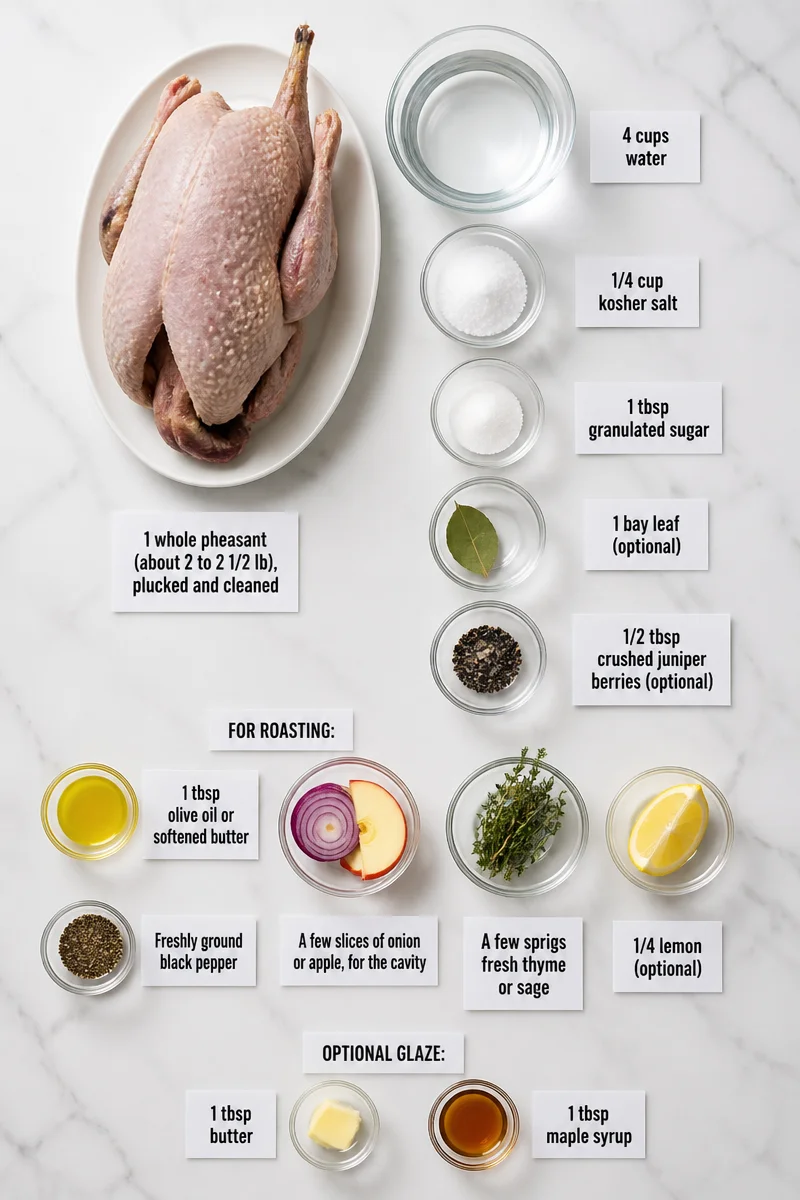
The recipe uses a short list of simple ingredients: 1 whole pheasant, 4 cups water, 1/4 cup kosher salt, 1 tbsp granulated sugar, and optional flavor boosters like bay leaf and juniper berries. For roasting, you only need olive oil or softened butter, black pepper, a few slices of onion or apple, fresh thyme or sage, and a little lemon if you like. If you want a light finish, the optional glaze of butter and maple syrup adds a soft shine and a hint of sweetness.
The method is straightforward, too. First, you make the brine by boiling the water with the salt, sugar, and seasonings, then you cool it fully. After that, you brine the bird for several hours, dry it well, and let it rest before roasting. Then you start the pheasant at high heat, lower the oven, and finish until the thigh reaches the right temperature. It sounds fancy, but in truth, it is an easy process once you follow the steps.
This is the kind of meal that works well on a chilly night, for a quiet Sunday supper, or for a small holiday meal. It also makes a thoughtful dish when you want something different from chicken or turkey. Since pheasant is lean, the dry brine and careful roasting really help keep it tender and enjoyable.
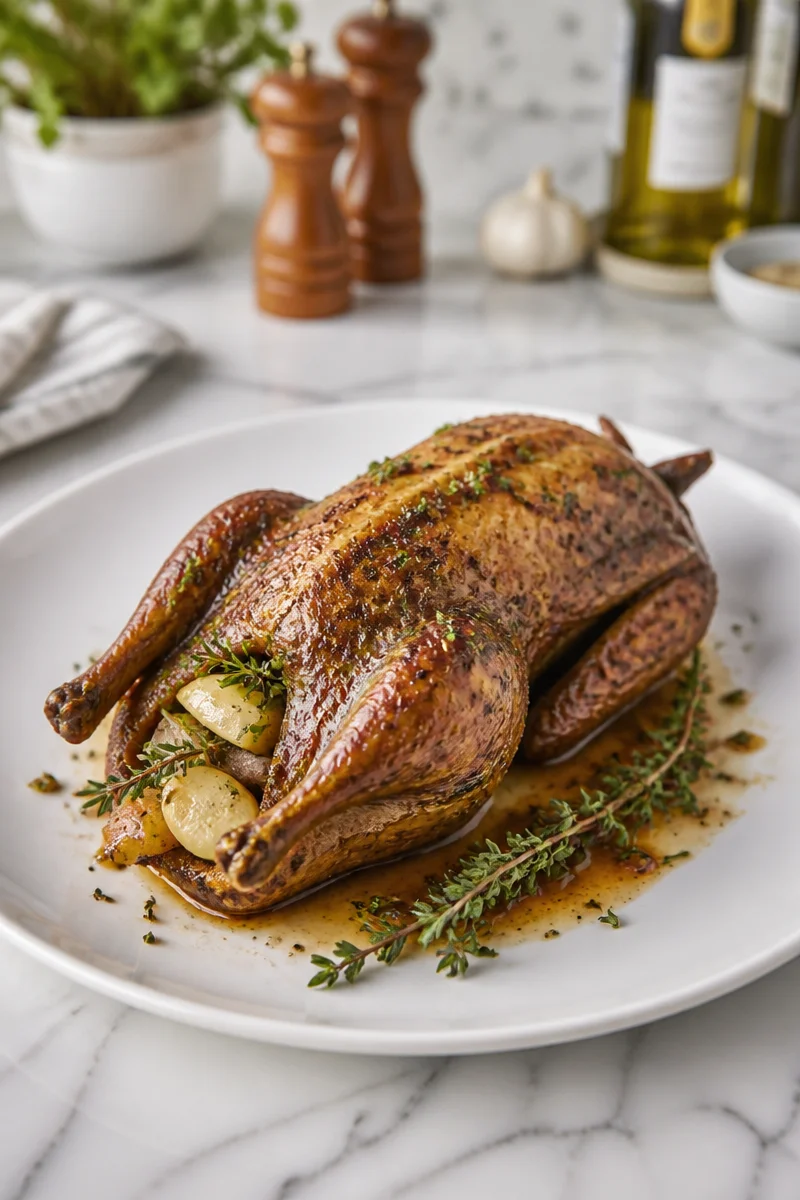
Why You’ll Love This Simple Dry Brined Roast Pheasant
- Simple method: You make the brine, soak the bird, and roast it. There is nothing hard here.
- Better flavor: The salt, sugar, and optional juniper give the pheasant a deeper, more balanced taste.
- Juicier meat: Because pheasant is lean, dry brining helps it stay moist instead of turning dry.
- Crispier skin: A good dry surface and high-heat start help the skin roast up nicely.
- Good for small gatherings: This recipe serves just enough for a cozy dinner, so it feels special without making too much.
Pheasant Tips
When buying pheasant, look for a bird that is plucked, cleaned, and about 2 to 2 1/2 pounds. Farm-raised pheasant is usually milder and a little more tender, while older wild pheasant can be stronger in flavor and benefit from the full brining time. If the bird looks very dry or the skin seems torn, choose another one if possible, because a neat bird roasts more evenly. Also, keep in mind that pheasant is lean, so it needs gentle attention. For the best results, do not skip the brine, and do not overcook it. A meat thermometer is your best friend here.
Options for Substitutions
- Use sea salt instead of kosher salt if that is what you have, but measure carefully because finer salt can taste stronger.
- Swap granulated sugar for a small amount of honey or brown sugar if you want a warmer flavor in the brine.
- Replace bay leaf with a small sprig of rosemary or parsley stems for a different herbal note.
- Use ground coriander or a few whole peppercorns instead of juniper berries if you want a similar woodsy taste without juniper.
- Trade olive oil for softened butter, or use a dairy-free butter substitute if needed.
- Fill the cavity with pear slices instead of onion or apple for a softer, sweeter finish.
Watch Out for These Mistakes
One common mistake is brining the pheasant too long. That can make the meat overly salty, especially if the bird is farm-raised and already fairly tender. So, follow the timing closely. Four hours is usually enough for a farm-raised bird, while an older wild rooster may need closer to eight hours.
Another problem is wet skin. If you skip the drying step, the skin will steam instead of roast. As a result, it will be less crisp and less appealing. After brining, pat the bird very dry, and if you have time, let it sit uncovered in the fridge so the surface can dry out even more.
It is also easy to overcook pheasant. Since it is lean, it can dry out quickly if you wait for the meat to look as done as chicken. Instead, use a thermometer and aim for 155 to 160°F in the thickest part of the thigh. A little pink near the bone is normal.
Finally, do not pack the cavity too tightly. If you stuff in too much onion, apple, or herbs, the heat cannot move through the bird well. So, keep the cavity loosely filled and let the oven do the work.
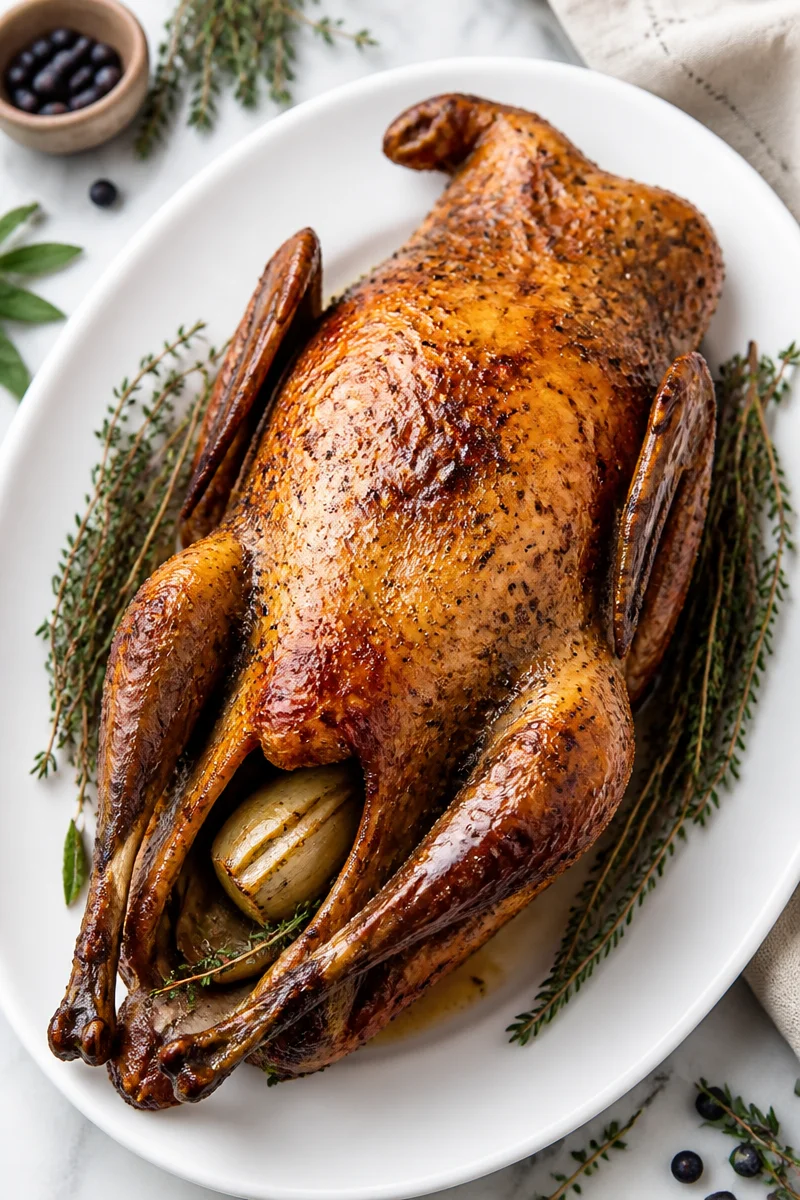
What to Serve With Simple Dry Brined Roast Pheasant?
This roast pheasant pairs well with side dishes that are warm, earthy, and comforting. Roasted potatoes, buttered green beans, and wild rice are all excellent choices. In addition, a simple pan gravy, mashed parsnips, or roasted carrots would fit beautifully. Since the bird has a mild, slightly gamey flavor, sides with gentle sweetness and a little richness help round out the plate.
Storage Instructions
Store: Place leftover pheasant in an airtight container and refrigerate for up to 3 days.
Freeze: Wrap the meat tightly, then place it in a freezer bag or freezer-safe container. Freeze for up to 2 months for best quality.
Reheat: For the stovetop, warm sliced meat gently in a covered skillet with a splash of broth, water, or pan juices over low heat. For the microwave, heat in short bursts at medium power so the meat does not dry out. Add a spoonful of liquid before reheating if you can.
Recipe Info
Preparation Time: 10 minutes, plus 4 hours brining
Cooking Time: 1 hour, plus 15 minutes resting
Total Time: 5 hours 25 minutes
Level of Difficulty: Easy to medium
Servings: 3 servings
Estimated Nutrition
Estimated nutrition for the whole recipe (without optional ingredients):
- Calories: about 1,050 to 1,200 total
- Protein: about 110 to 135 grams
- Fat: about 40 to 55 grams
- Carbohydrates: about 4 to 8 grams
Ingredients
- 1 whole pheasant (about 2 to 2 1/2 lb), plucked and cleaned
- 4 cups water
- 1/4 cup kosher salt
- 1 tbsp granulated sugar
- 1 bay leaf (optional)
- 1/2 tbsp crushed juniper berries (optional)
- 1 tbsp olive oil or softened butter
- Freshly ground black pepper
- A few slices of onion or apple, for the cavity
- A few sprigs fresh thyme or sage
- 1/4 lemon (optional)
- 1 tbsp butter
- 1 tbsp maple syrup
Step-by-Step Instructions
Step 1: Make the Brine
In a pot, bring the water, salt, sugar, bay leaf, and juniper berries to a boil. Stir until the salt and sugar dissolve. Then let the brine cool completely to room temperature before using it. This matters, because a hot brine can start cooking the pheasant too early.
Step 2: Brine the Pheasant
Place the pheasant in a bowl or zip-top bag, then pour in the cooled brine until the bird is fully submerged. Refrigerate for 4 hours if it is a farm-raised bird, or up to 8 hours for an older wild rooster. Keep in mind that a longer brine will make the meat saltier, so do not go past the recommended time.
Step 3: Dry the Skin
Lift the pheasant out of the brine, rinse it briefly, and pat it very dry with paper towels. For even crisper skin, place it on a rack and refrigerate it uncovered for 12 to 24 hours. If you have the time, this extra step helps a lot.
Step 4: Heat the Oven and Season
Let the pheasant sit at room temperature for 30 to 60 minutes while you preheat the oven to 500°F (260°C), or as high as it will go but not lower than 400°F (200°C). Rub the bird all over with olive oil or softened butter, then season with black pepper. Loosely fill the cavity with onion or apple slices, fresh herbs, and lemon if using. Do not pack it tightly.
Step 5: Roast, Lower the Heat, and Finish
Place the pheasant breast-up in a roasting pan or oven-safe skillet and roast uncovered for 15 minutes. Then remove the pan, lower the oven to 350°F (175°C), and leave the oven door open for a minute so it cools faster. If you are using the glaze, melt the butter and maple syrup together, then brush it over the bird. Return the pheasant to the oven and roast for 30 to 45 minutes more, until the thickest part of the thigh reaches 155 to 160°F (68 to 71°C). The juices should run mostly clear, though a little pink near the bone is normal.
Step 6: Rest, Carve, and Serve
Take the pheasant out of the oven and let it rest for 10 to 15 minutes before carving. This helps the juices settle back into the meat. Then carve and serve with pan juices, roasted vegetables, or wild rice. If you have leftovers, cool them and refrigerate them within a few hours.
Conclusion
This simple dry brined roast pheasant is a smart way to turn a lean bird into a tender, flavorful meal. The brine helps with moisture, the high-heat start improves the skin, and the gentle finish keeps the meat from drying out. So, if you want a dinner that feels special but stays easy to manage, this recipe is a great choice.
Try it the next time you want a cozy roast for a small family meal or a quiet weekend supper. Then come back and share how it turned out, or explore more easy roast recipes if you like this style of cooking.
Print
Simple Dry Brined Roast Pheasant
- Prep Time: 10 minutes
- Cook Time: 75 minutes
- Total Time: 325 minutes
- Yield: 3 servings 1x
- Category: Main Course
- Method: Roasting
- Cuisine: American
- Diet: Paleo
Description
A rustic and cozy roast pheasant recipe that’s easy to make and packed with flavor, thanks to a simple dry brine.
Ingredients
- 1 whole pheasant (about 2 to 2 1/2 lb), plucked and cleaned
- 4 cups water
- 1/4 cup kosher salt
- 1 tbsp granulated sugar
- 1 bay leaf (optional)
- 1/2 tbsp crushed juniper berries (optional)
- 1 tbsp olive oil or softened butter
- Freshly ground black pepper
- A few slices of onion or apple, for the cavity
- A few sprigs fresh thyme or sage
- 1/4 lemon (optional)
- 1 tbsp butter
- 1 tbsp maple syrup
Instructions
- Make the brine: In a pot, bring the water, salt, sugar, bay leaf, and juniper berries to a boil. Stir until the salt and sugar dissolve. Let the brine cool completely to room temperature before using it.
- Brine the pheasant: Place the pheasant in a bowl or zip-top bag, then pour in the cooled brine until the bird is fully submerged. Refrigerate for 4 hours if it is a farm-raised bird, or up to 8 hours for an older wild rooster.
- Dry the skin: Lift the pheasant out of the brine, rinse it briefly, and pat it very dry with paper towels. For crisper skin, refrigerate uncovered for 12 to 24 hours.
- Heat the oven and season: Let the pheasant sit at room temperature while you preheat the oven to 500°F. Rub the bird with olive oil or butter, then season with black pepper. Loosely fill the cavity with onion slices, fresh herbs, and lemon if using.
- Roast, lower the heat, and finish: Roast the pheasant breast-up for 15 minutes. Then lower the oven to 350°F and brush with melted butter and maple syrup, returning to the oven for an additional 30 to 45 minutes.
- Rest, carve, and serve: Let the pheasant rest for 10 to 15 minutes before carving. Serve with pan juices, roasted vegetables, or wild rice.
Notes
Ensure the pheasant is not overcooked and follows recommended brining times for best flavor and texture.
Nutrition
- Serving Size: 1 serving
- Calories: 400
- Sugar: 5g
- Sodium: 900mg
- Fat: 20g
- Saturated Fat: 6g
- Unsaturated Fat: 10g
- Trans Fat: 0g
- Carbohydrates: 7g
- Fiber: 1g
- Protein: 35g
- Cholesterol: 120mg
