
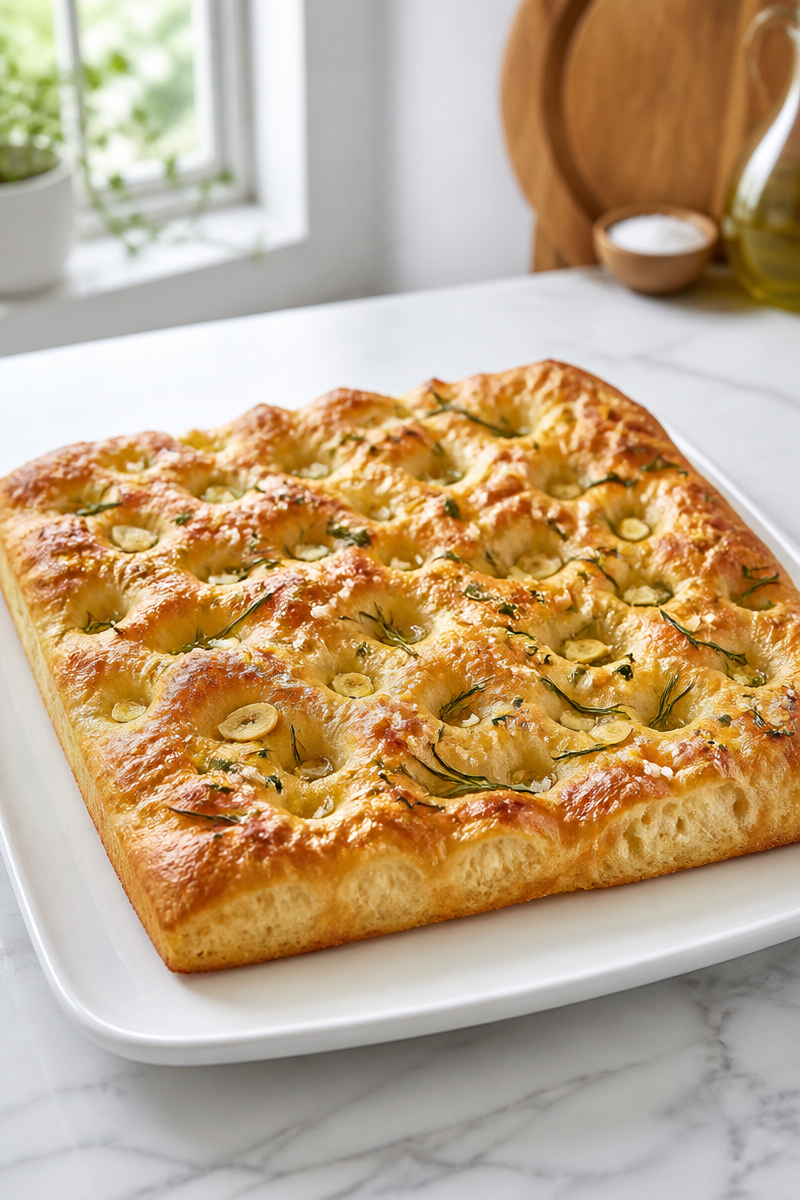
Freshly baked focaccia has a way of making the whole kitchen feel warmer. For me, Rosemary Garlic Homemade Focaccia Bread is pure comfort. It is soft inside, crisp on the edges, and full of that cozy smell of olive oil, garlic, and herbs that makes people wander into the kitchen asking, “What are you baking?”
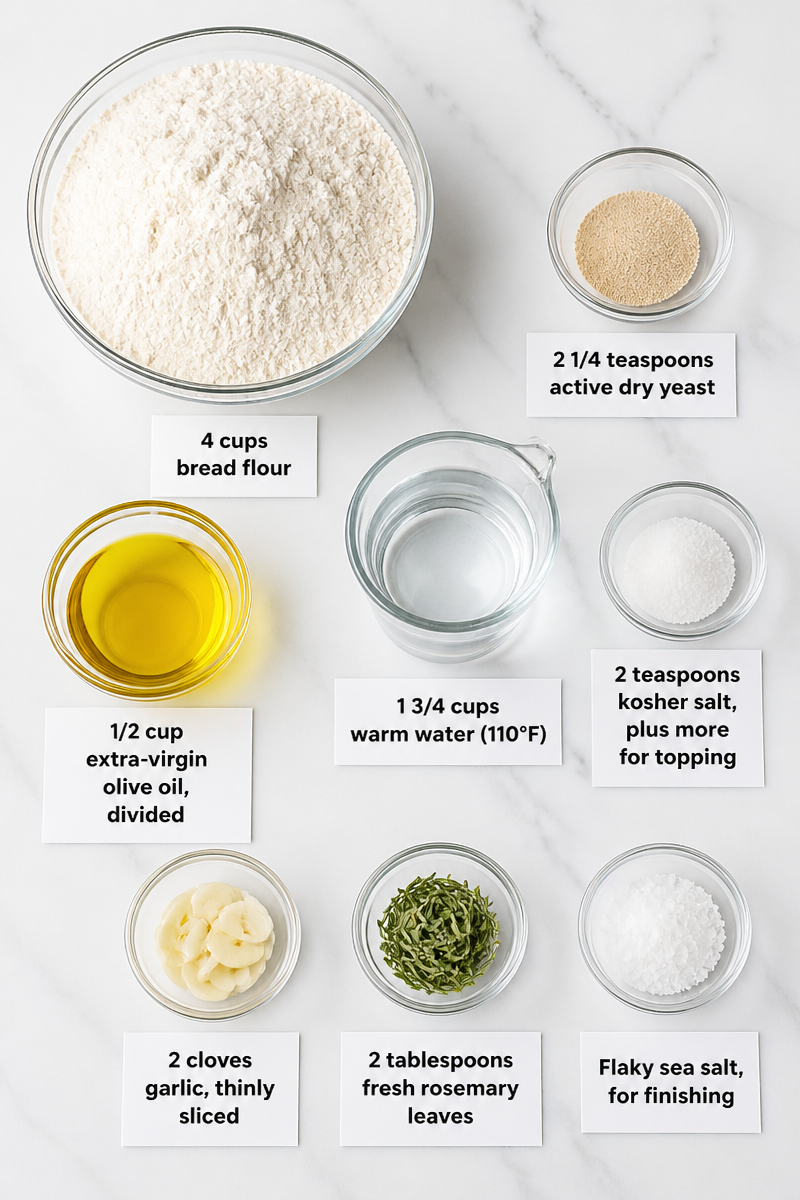
This focaccia bread brings together 4 cups bread flour, 2 1/4 teaspoons active dry yeast, 2 teaspoons kosher salt, plus more for topping, 1 3/4 cups warm water (110°F), 1/2 cup extra-virgin olive oil, divided, 2 cloves garlic, thinly sliced, 2 tablespoons fresh rosemary leaves, and flaky sea salt for finishing. As a result, you get a loaf that is tender, airy, and rich with flavor. The bread tastes savory and fragrant, with the rosemary giving it a piney freshness and the garlic adding a gentle bite. Meanwhile, the olive oil gives the crust a golden finish and a soft, luxurious feel.
The method is simple, too. First, you activate the yeast in warm water until it looks foamy. Then you mix in the flour, salt, and some olive oil to make a sticky dough. After that, the dough rises, gets stretched into a well-oiled pan, and rises again. Finally, you dimple the top, add garlic and rosemary, then bake until deeply golden. Since the steps are easy to follow, this is a great bread recipe for home bakers who want good results without stress.
This Rosemary Garlic Homemade Focaccia Bread is perfect for family dinners, holiday meals, soup night, or a weekend baking project. Also, it is a nice choice for potlucks because it travels well, slices neatly, and tastes just as good warm or at room temperature.
Why You’ll Love This Rosemary Garlic Homemade Focaccia Bread
- It uses simple pantry ingredients, so you do not need a special shopping list.
- The dough is forgiving, which makes this a friendly bread for beginners.
- The texture is wonderful, with a soft crumb and a crisp, olive oil-rich crust.
- It pairs with almost any meal, from soup to salad to pasta.
- It makes the kitchen smell amazing, thanks to garlic, rosemary, and fresh bread.
Bread Flour Tips
Bread flour is the base of this Rosemary Garlic Homemade Focaccia Bread, so choosing the right one matters. Bread flour has more protein than all-purpose flour, and that helps create a chewy, airy texture. For the best results, use a fresh bag that is stored in a cool, dry place. In addition, measure it carefully. Too much flour can make the dough dense, while too little can make it overly wet. If you want a light, open crumb, bread flour is the right choice here.
Options for Substitutions
- You can use all-purpose flour if you do not have bread flour, although the texture will be a little softer and less chewy.
- You can swap active dry yeast for instant yeast, but reduce the rise time slightly and watch the dough closely.
- You can use fine salt instead of kosher salt, but start with less since fine salt is stronger by volume.
- You can replace rosemary with thyme, oregano, or a mix of Italian herbs.
- You can use roasted garlic instead of raw garlic for a sweeter, milder flavor.
- You can finish the bread with coarse salt or a light sprinkle of parmesan if you want a richer topping.
Watch Out for These Mistakes
First, do not use water that is too hot. Warm water should feel comfortable, not hot, around 110°F. If the water is too hot, it can weaken or kill the yeast. On the other hand, water that is too cool may slow the yeast down and leave the dough flat. So, if you can, check the temperature for best results.
Also, do not add too much flour while mixing. This focaccia dough should stay sticky and loose. That is normal. Because the dough is soft, it rises well and bakes into a light, airy bread. If you keep adding flour until it feels dry, the focaccia may turn heavy.
Next, be gentle when you move the dough into the pan. After the first rise, it will be full of air. Therefore, stretch it slowly and press it into the corners without smashing it down. If you deflate it too much, the bread may lose some of that lovely rise and open texture.
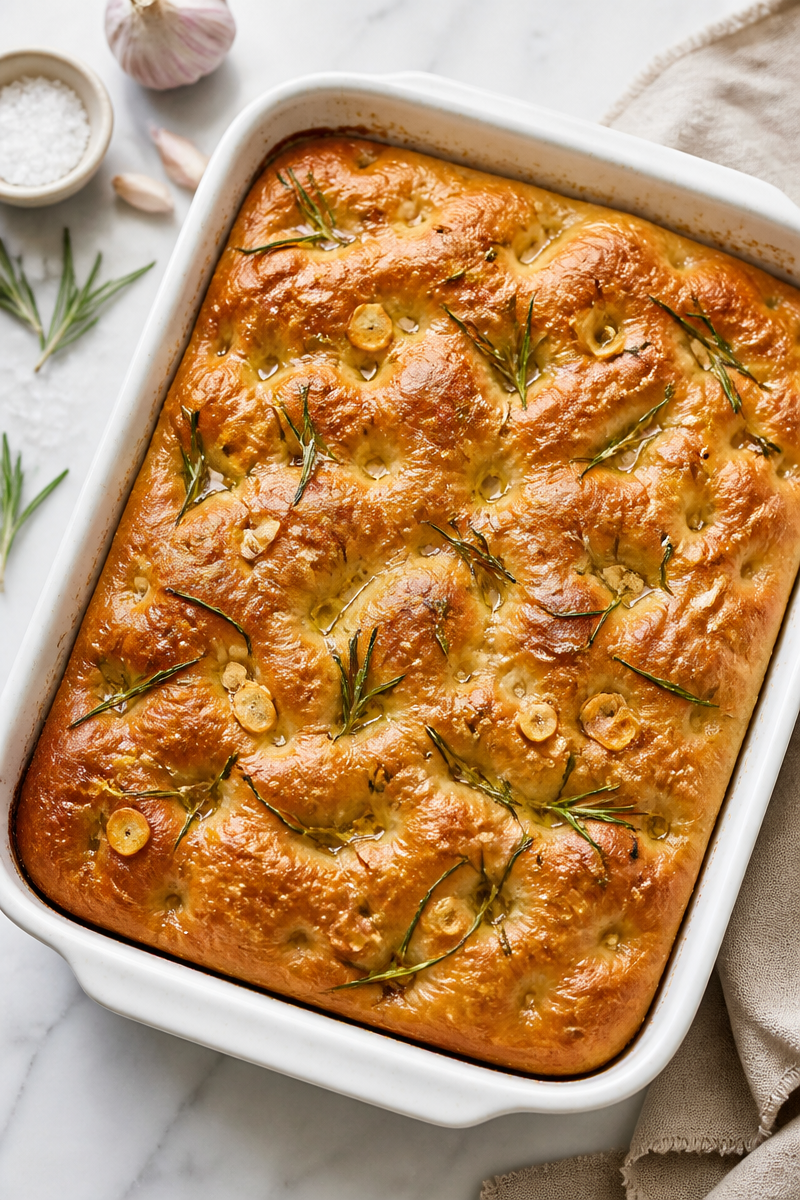
Finally, do not skimp on the olive oil or the dimples. The oil helps the top turn golden and crisp, while the dimples catch all that flavor. Also, the garlic and rosemary should go on just before baking so they stay fragrant and do not dry out too much in the oven.
What to Serve With Rosemary Garlic Homemade Focaccia Bread?
This Rosemary Garlic Homemade Focaccia Bread goes well with so many meals. For a cozy dinner, serve it with tomato soup, creamy chicken soup, or a simple minestrone. It is also wonderful next to a big green salad, pasta with marinara, or roasted chicken. If you are serving guests, add a cheese board with olives, fresh fruit, and a little honey for dipping. That way, the bread becomes part of a warm, easy spread.
Storage Instructions
Store: Wrap leftover focaccia tightly and keep it at room temperature for up to 2 days. If you want to keep it longer, you can refrigerate it for up to 4 days, but the crust may soften a bit.
Freeze: Wrap slices well and freeze for up to 2 months. For best texture, freeze pieces in a single layer first, then transfer them to a freezer bag.
Reheat: To reheat on the stovetop, warm slices in a dry skillet over low heat for a few minutes per side until heated through. For the microwave, heat a slice for 15 to 20 seconds, then check and add a few seconds more if needed. However, the oven will give you the best crust if you have time.
Recipe Info
Preparation Time: 20 minutes
Cooking Time: 25 minutes
Total Time: About 2 hours 45 minutes
Level of Difficulty: Easy
Servings: 12 squares
Estimated Nutrition
Estimated nutrition for the whole recipe (without optional ingredients):
Calories: 2,200 to 2,500
Protein: 45 to 60 grams
Fat: 90 to 120 grams
Carbohydrates: 280 to 330 grams
Ingredients
- 4 cups bread flour
- 2 1/4 teaspoons active dry yeast
- 2 teaspoons kosher salt, plus more for topping
- 1 3/4 cups warm water (110°F)
- 1/2 cup extra-virgin olive oil, divided
- 2 cloves garlic, thinly sliced
- 2 tablespoons fresh rosemary leaves
- Flaky sea salt, for finishing
Step-by-Step Instructions
Step 1: Activate the Yeast
Start by combining the warm water and active dry yeast in a large bowl. Let it sit for 5 to 10 minutes until the top looks foamy. This step tells you the yeast is alive and ready to work, so it is worth waiting for.
Step 2: Mix the Dough
Next, add the bread flour, kosher salt, and 1/4 cup of the olive oil to the yeast mixture. Stir with a wooden spoon or dough hook until a shaggy, sticky dough forms. At this stage, the dough will look rough, and that is exactly what you want.
Step 3: Let the Dough Rise
Cover the bowl with plastic wrap and let the dough rise in a warm spot for 1.5 to 2 hours, or until it has doubled in size. Because this is the time when flavor and texture build, do not rush it. A good rise gives the focaccia its soft, airy crumb.
Step 4: Prepare the Pan and Shape the Dough
Pour 2 tablespoons of the remaining olive oil into a 9×13-inch baking pan and spread it over the bottom and sides. Then transfer the dough into the pan and gently stretch it toward the corners without pressing out too much air. Cover it loosely and let it rise again for 30 to 45 minutes.
Step 5: Dimple, Top, and Bake
Preheat the oven to 425°F. Using oiled fingertips, press deep dimples all over the dough. After that, drizzle the remaining olive oil over the top so it pools in the dimples. Scatter the garlic slices and rosemary evenly across the surface, then finish with flaky sea salt and a little extra kosher salt if you like. Bake for 22 to 25 minutes, until the top and bottom are deeply golden brown.
Step 6: Cool, Slice, and Enjoy
Let the focaccia cool in the pan for about 10 minutes, then move it to a wire rack. Slice it into squares and serve it warm or at room temperature. If you have leftovers, store them well so you can enjoy the bread again later.
Rosemary Garlic Homemade Focaccia Bread is one of those recipes that feels special, yet it is still easy enough for a regular day. The dough is simple, the topping is full of flavor, and the finished bread is soft, golden, and deeply satisfying. So, if you are looking for a homemade bread that brings comfort to the table, give this one a try. If you make it, share your results and let me know how you served it. And if you love easy bread recipes, explore more cozy baking posts next.
Print
Rosemary Garlic Homemade Focaccia Bread
- Prep Time: 20 minutes
- Cook Time: 25 minutes
- Total Time: 165 minutes
- Yield: 12 servings 1x
- Category: Bread
- Method: Baking
- Cuisine: Italian
- Diet: Vegetarian
Description
A beautifully soft and crisp focaccia infused with garlic and rosemary, perfect for any meal or gathering.
Ingredients
- 4 cups bread flour
- 2 1/4 teaspoons active dry yeast
- 2 teaspoons kosher salt, plus more for topping
- 1 3/4 cups warm water (110°F)
- 1/2 cup extra-virgin olive oil, divided
- 2 cloves garlic, thinly sliced
- 2 tablespoons fresh rosemary leaves
- Flaky sea salt, for finishing
Instructions
- Activate the yeast by combining warm water and active dry yeast in a large bowl; let it sit for 5 to 10 minutes until foamy.
- Mix the dough by adding bread flour, kosher salt, and 1/4 cup of olive oil to the yeast mixture; stir until a shaggy, sticky dough forms.
- Let the dough rise, covered, in a warm spot for 1.5 to 2 hours until doubled in size.
- Prepare the pan by pouring 2 tablespoons of olive oil into a 9×13-inch baking pan and stretching the dough towards the corners before covering and letting it rise again for 30 to 45 minutes.
- Dimple the dough with oiled fingertips, drizzle with remaining olive oil, top with garlic and rosemary, and finish with flaky sea salt before baking at 425°F for 22 to 25 minutes.
- Cool the focaccia in the pan for 10 minutes, then move to a wire rack, slice, and serve warm or at room temperature.
Notes
For best results, ensure the water temperature is around 110°F and do not add too much flour. Dimpling the dough and using plenty of olive oil are key to flavor and texture.
Nutrition
- Serving Size: 1 square
- Calories: 220
- Sugar: 0g
- Sodium: 200mg
- Fat: 10g
- Saturated Fat: 1g
- Unsaturated Fat: 9g
- Trans Fat: 0g
- Carbohydrates: 30g
- Fiber: 1g
- Protein: 5g
- Cholesterol: 0mg
