
Swedish meatballs are one of the most popular dishes in Sweden, and a staple of the IKEA cafeteria menu. But what makes them so special and different from other types of meatballs? In this article, we will explore the history, ingredients, preparation, and serving of Swedish meatballs, and reveal some of the secrets behind their unique flavor and texture.
The history of Swedish meatballs
Contrary to popular belief, Swedish meatballs are not actually Swedish in origin. They were introduced to Sweden by King Charles XII, who ruled from 1697 to 1718. He spent several years in exile in Turkey during the Great Northern War, and brought back many cultural influences from his travels, including the recipe for köfte, or Turkish meatballs.
The Swedish adapted the recipe to their own tastes and ingredients, and called them köttbullar, which means “meat buns” in Swedish. They became a popular dish among the upper classes, and later spread to the rest of the population. They were especially enjoyed during the Christmas season, as a festive and hearty meal.
The ingredients of Swedish meatballs
One of the main characteristics of Swedish meatballs is that they are made with a combination of beef and pork. This gives them a richer flavor and a juicier texture than other meatballs. Some recipes also include veal, or even venison, for a more gamey taste.
Another distinctive feature of Swedish meatballs is that they are seasoned with warm spices, such as allspice, nutmeg, white pepper, and sometimes ground ginger. These spices add a subtle sweetness and a hint of exoticism to the meatballs, and contrast well with the savory sauce and the tart lingonberries.
Swedish meatballs also contain grated onion and panade, which is bread soaked in milk or cream. The onion adds moisture and flavor to the meatballs, while the panade helps bind the mixture and prevent it from falling apart. The panade also makes the meatballs lighter and softer than other meatballs.
The preparation of Swedish meatballs
Swedish meatballs are usually quite small in size, about an inch in diameter or less. This makes them easier to cook and eat, and also allows them to absorb more sauce. To shape the meatballs, it is recommended to wet your hands with cold water, to prevent the mixture from sticking to your fingers.
Some recipes suggest whipping the meatball mixture in a stand mixer, to create a smoother and more uniform texture. This also helps incorporate air into the mixture, which makes the meatballs more tender and fluffy.
To cook the meatballs, they are usually browned in a skillet over medium-high heat, turning them frequently to ensure even cooking. Then, they are transferred to a baking dish and finished in the oven, to keep them warm and moist.
The serving of Swedish meatballs
Swedish meatballs are traditionally served with a creamy gravy, made from sour cream, yogurt, or cream cheese, and flavored with beef or bone broth, butter, flour, and salt and pepper. The gravy adds richness and moisture to the meatballs, and complements their spiciness.
Swedish meatballs are also accompanied by lingonberry jam, or lingonberry sauce, which is made from wild berries that grow in Sweden. Lingonberries have a sweet, sour, and tart flavor, similar to cranberries, and balance the heaviness of the meatballs and the gravy. They also add a pop of color and freshness to the dish.
Another common side dish for Swedish meatballs is mashed potatoes, which are smooth and creamy, and soak up the gravy well. Some people also like to serve boiled or pickled cucumbers, green beans, or salad, for some crunch and contrast.
Conclusion
Swedish meatballs are a delicious and comforting dish, that have a unique and complex flavor profile. They are the result of a cultural fusion between Sweden and Turkey, and reflect the history and traditions of both countries. They are easy to make and enjoy, and can be found in many restaurants and stores, as well as in your own kitchen. Next time you crave some Swedish meatballs, you can appreciate their uniqueness and savor their taste.
Print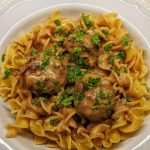
Swedish Meatballs
- Prep Time: 15 minutes
- Cook Time: 30 minutes
- Total Time: 45 minutes
- Yield: 4 servings 1x
- Category: Main Course
- Method: Baking
- Cuisine: Swedish
- Diet: Non-Vegetarian
Description
Delicious Swedish meatballs made with a blend of beef, pork, and warm spices, served with creamy gravy and lingonberry sauce.
Ingredients
- 1 pound ground beef
- 1 pound ground pork
- 1 medium onion, grated
- 1 cup breadcrumbs
- 1/2 cup milk
- 1/4 teaspoon allspice
- 1/4 teaspoon nutmeg
- 1/4 teaspoon white pepper
- 1/4 teaspoon ground ginger
- Salt and pepper to taste
- 2 tablespoons butter
- 2 cups beef broth
- 1/2 cup sour cream
- Lingonberry jam for serving
Instructions
- Preheat your oven to 375°F (190°C).
- Mix ground beef, ground pork, grated onion, breadcrumbs, and milk in a large bowl.
- Season with allspice, nutmeg, white pepper, ginger, salt, and pepper.
- Shape the mixture into small meatballs, about 1 inch in diameter.
- Brown the meatballs in a skillet over medium-high heat until evenly cooked.
- Transfer meatballs to a baking dish and bake in the preheated oven for 15-20 minutes.
- Make the gravy by combining butter, flour, and beef broth in the skillet, stirring until thickened.
- Stir in sour cream until well combined.
- Serve meatballs with gravy and a side of lingonberry jam.
Notes
To ensure meatballs are moist, do not overmix the meat mixture. Serve with mashed potatoes or pickled cucumbers for a classic accompaniment.
Nutrition
- Serving Size: 1 serving
- Calories: 450
- Sugar: 3g
- Sodium: 600mg
- Fat: 24g
- Saturated Fat: 10g
- Unsaturated Fat: 8g
- Trans Fat: 1g
- Carbohydrates: 30g
- Fiber: 2g
- Protein: 25g
- Cholesterol: 80mg
